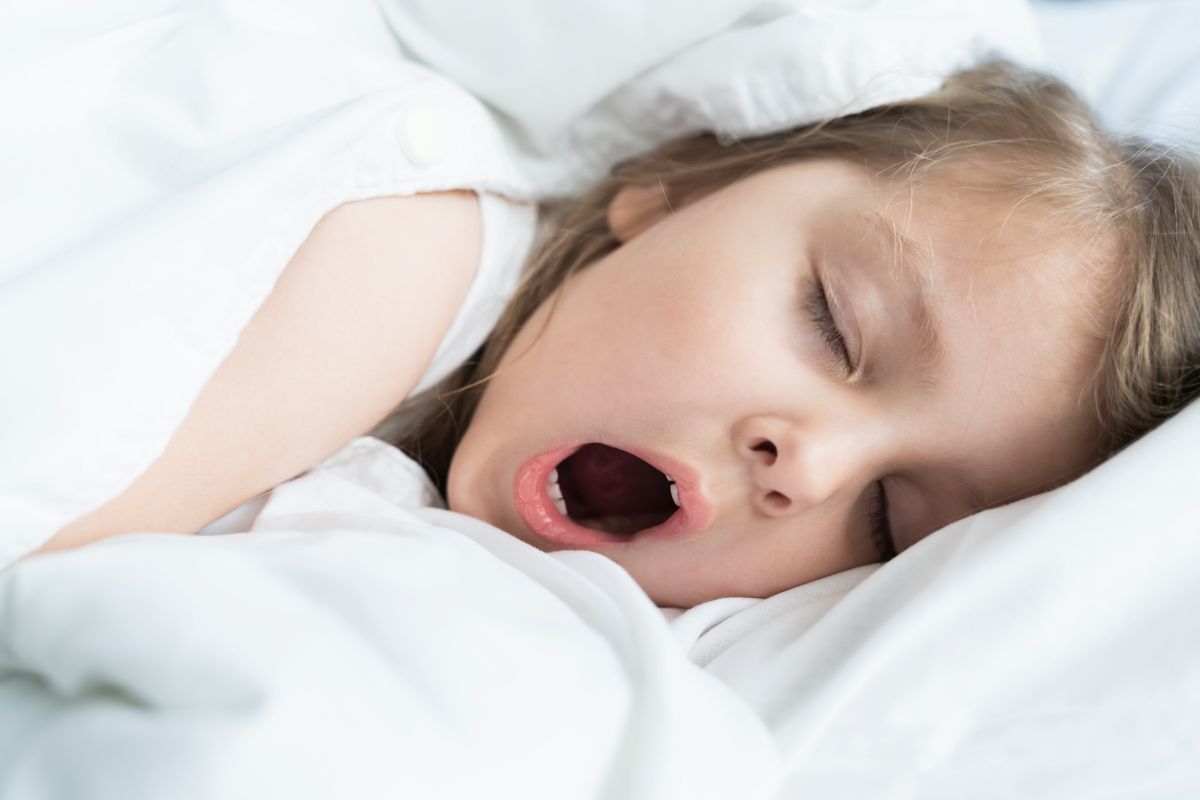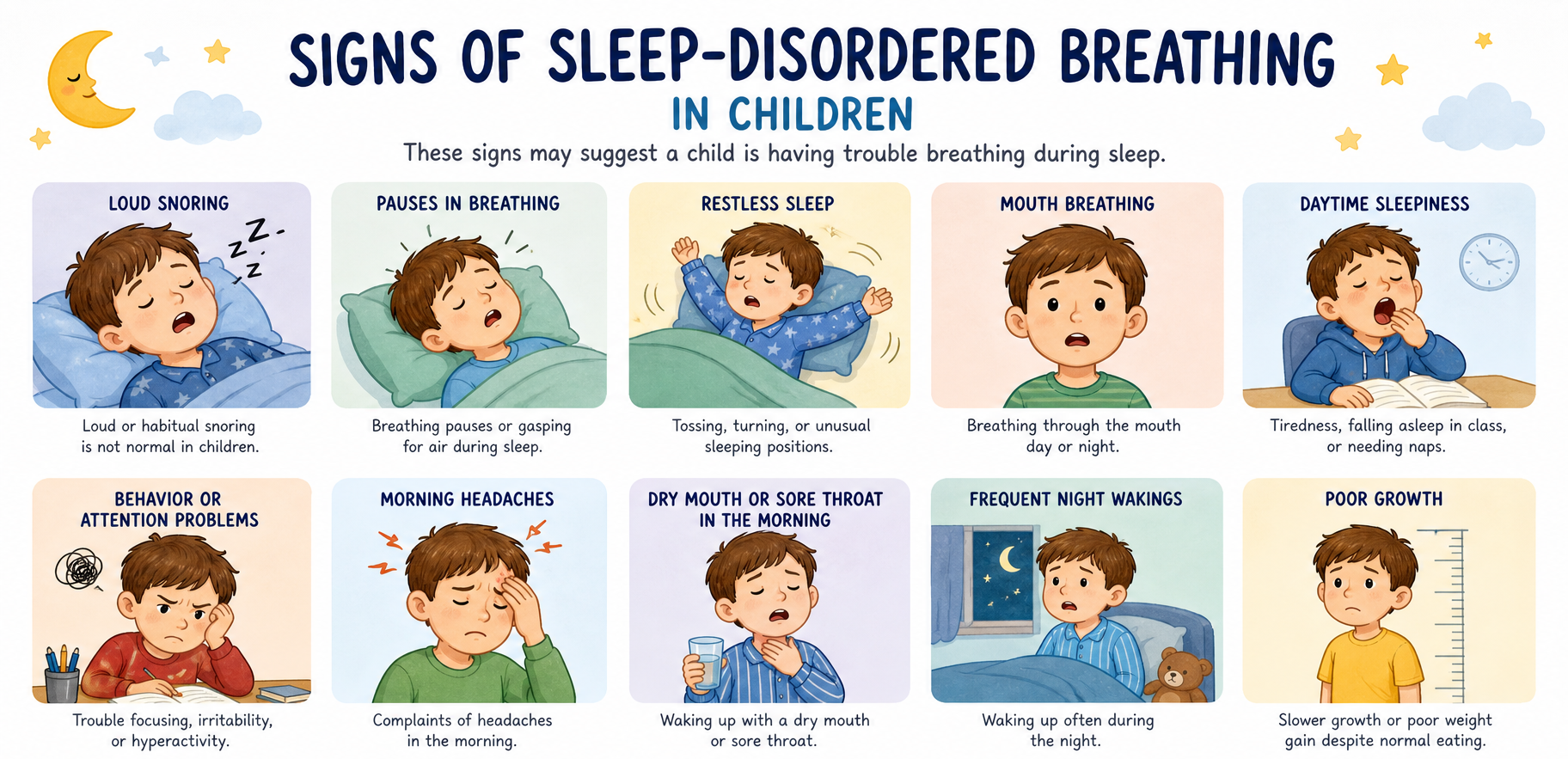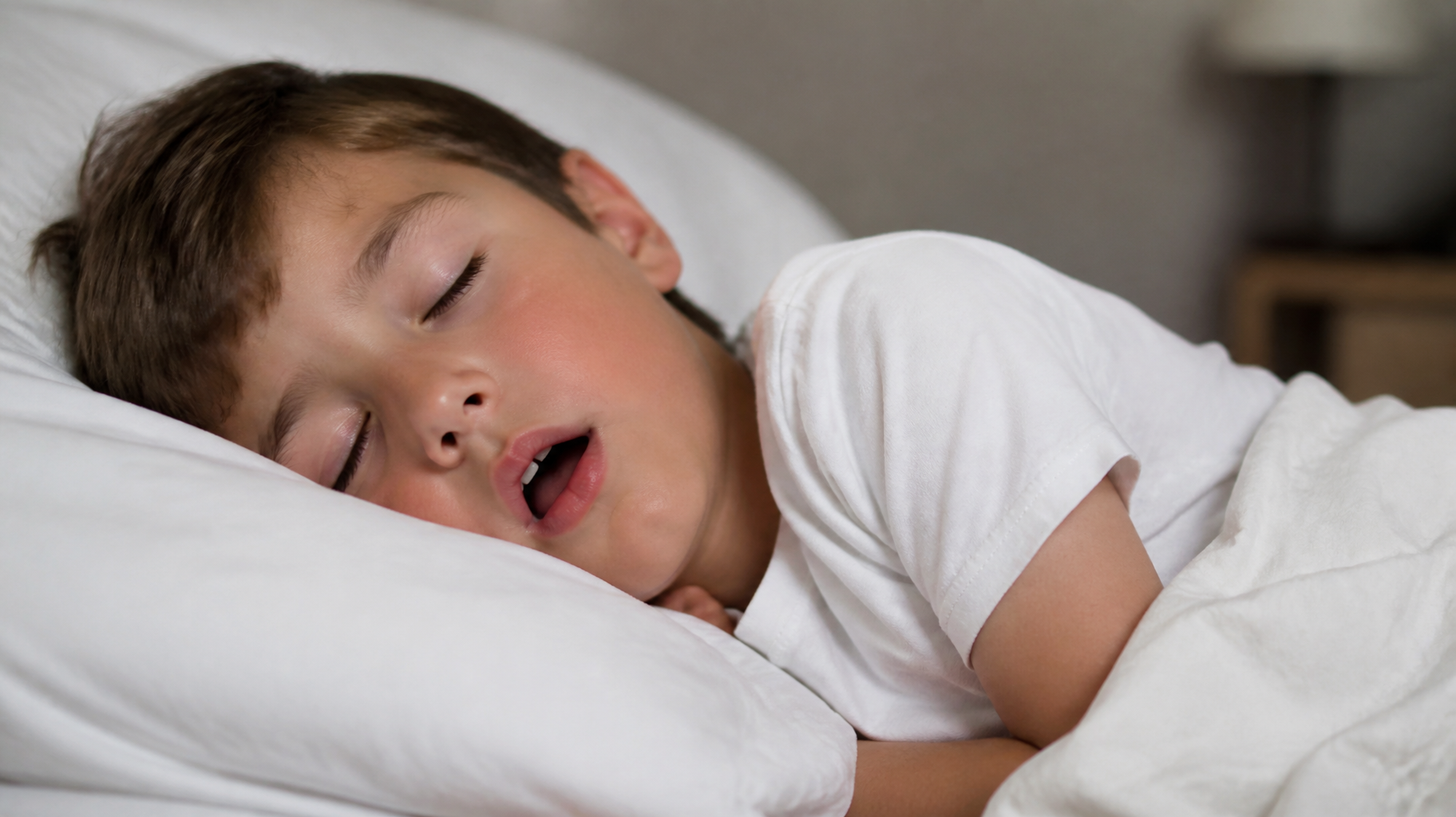

Persistent mouth breathing is worth discussing with your child’s healthcare provider. It does not automatically mean they need braces, an appliance, or myofunctional therapy. Understanding why it is happening comes first.
Why Might a Child Breathe Through Their Mouth?
Difficulty breathing through the nose can contribute to mouth breathing. Allergies or enlarged tissues may be involved, while tongue and lip posture can also be part of the picture.
An open-mouth posture alone does not establish the cause. ASHA’s linked patient resource on orofacial myofunctional disorders explains how medical, dental, and oral-function assessments can address different parts of the concern.
What Should You Notice Before an Appointment?
Start with what you can describe, rather than trying to interpret it. Useful notes include:
- Whether you notice mouth breathing during the day, at night, or both
- How long you have noticed the pattern
- Whether your child reports difficulty breathing through their nose
- Any snoring or sleep concerns you want to mention
- Previous assessments or recommendations
Bring relevant records if you have them. If you have already received advice from another professional, include that in the conversation.
You do not need to know why it is happening to start a useful conversation about it.
What Can a Dental Evaluation Contribute?
A dentist or orthodontist can assess teeth, bite relationships, and jaw movement. A medical provider may investigate nasal breathing, while a speech-language pathologist may evaluate oral function. These assessments answer different questions. Learn about the roles of different professionals.
Ask your provider to explain any finding in plain language: What was observed? Why does it matter? What would the recommended next step address?
Serenity Healthy Smiles offers airway-focused dental care in Appleton. You can bring both your dental questions and observations about mouth breathing to the discussion.
Address breathing difficulties before focusing on exercises.
Medical issues that affect breathing need attention first. Oral exercises should not be presented as a way to overcome an untreated obstruction. See the treatment guidance.
Does My Child Need Myofunctional Therapy?
Not every child does. Assessment determines whether therapy addressing oral posture and function is appropriate. Ask what goals the provider proposes, what home practice involves, and how progress will be reviewed.
Learn about myofunctional therapy in Appleton and discuss whether an evaluation fits your child’s concerns.
Does Mouth Breathing Mean My Child Needs Orthodontics?
Mouth breathing alone is not enough to choose orthodontic treatment. Ask whether there is a specific bite or dental-development finding and whether further medical assessment is needed.
For suspected sleep apnea, the American Academy of Pediatric Dentistry recommends medical referral. Dental appliances should be considered only after comprehensive assessment as part of coordinated care.
Want to understand the dental options before making a decision?
Ask About a ConsultationWhat If My Child Also Snores?
Tell your child’s healthcare provider about both concerns. Our guide to why children snore explains what to discuss. Gasping or observed breathing pauses warrant prompt medical assessment.
Find Your Next Step in Appleton
Contact Serenity Healthy Smiles to discuss a dental consultation with Dr. Dawn Diehnelt. Explain your child’s age, what you have noticed, and whether another healthcare professional is already involved.
Visit us at W3132 Van Roy Road, Appleton, WI 54915. Call (920) 364-0575 or request an appointment.