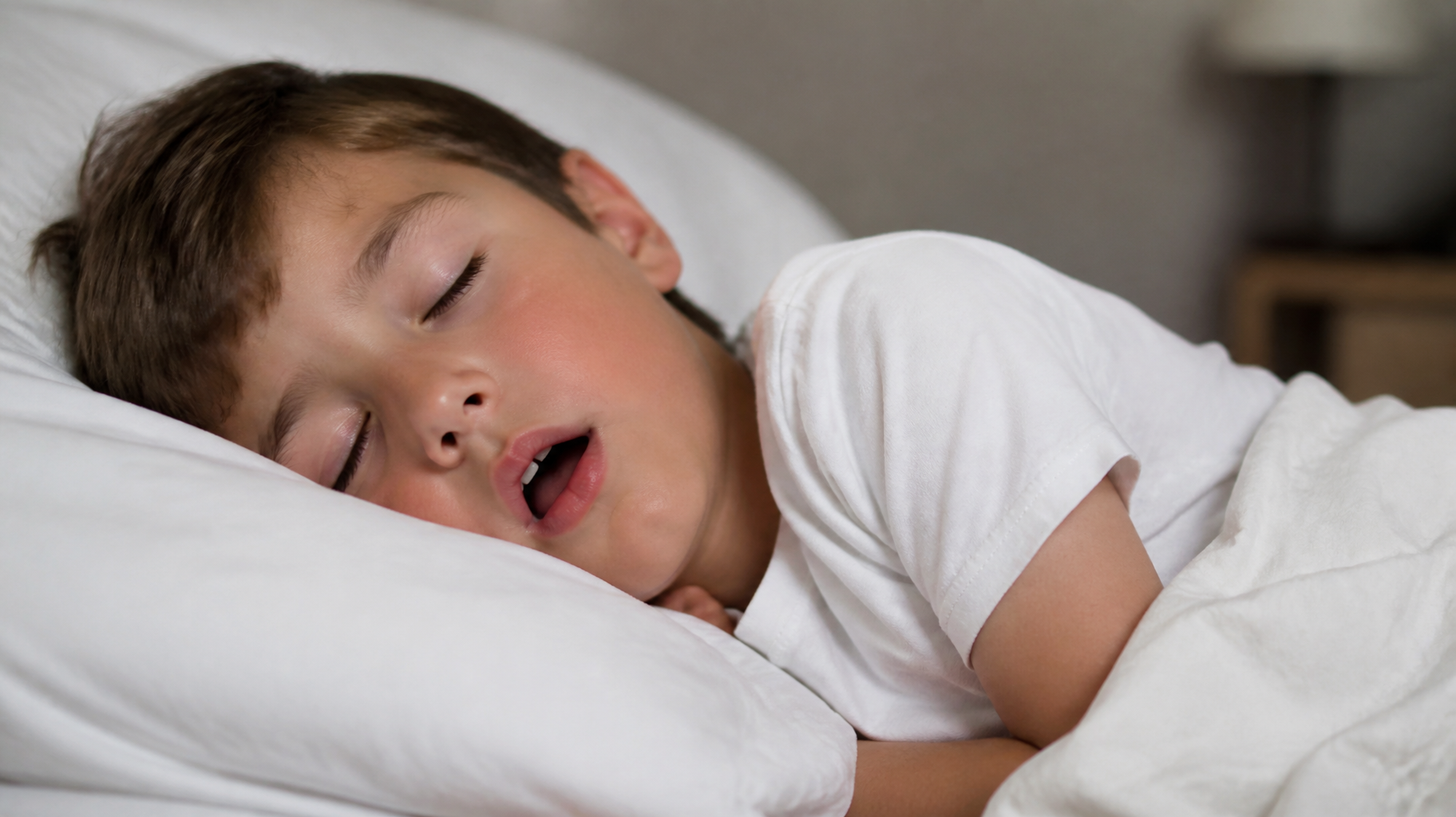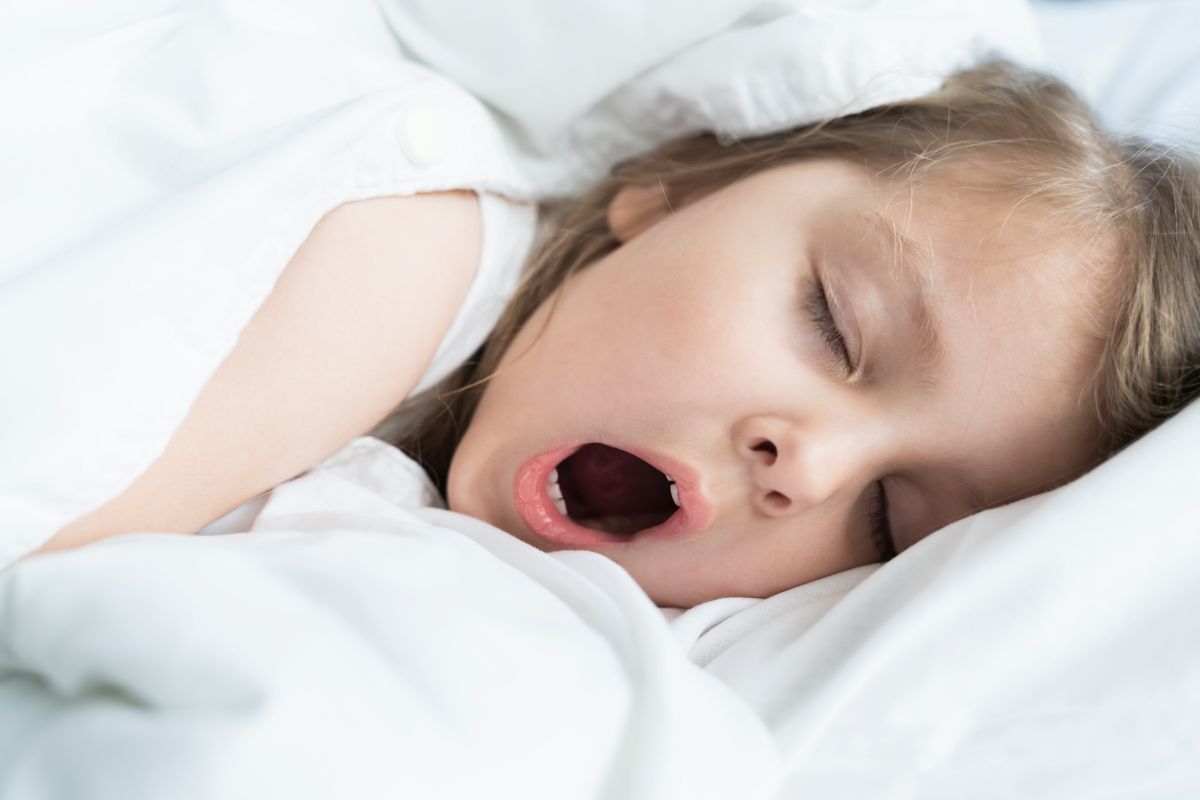

Frequent snoring is worth discussing with your child’s healthcare provider. It does not automatically mean sleep apnea or establish a need for an orthodontic appliance. Understanding the pattern is the starting point.
Why Do Children Snore?
Snoring has several possible explanations. Enlarged tonsils and adenoids are common contributors to obstructive sleep apnea in children. Allergies and nasal congestion can also affect breathing. A medical evaluation helps identify what is relevant to your child.
The American Thoracic Society lists snoring at least three nights a week among the clues that may warrant assessment for sleep apnea. Snoring alone does not confirm a diagnosis. Read its parent guide to childhood sleep apnea.
What Should You Watch For Alongside Snoring?
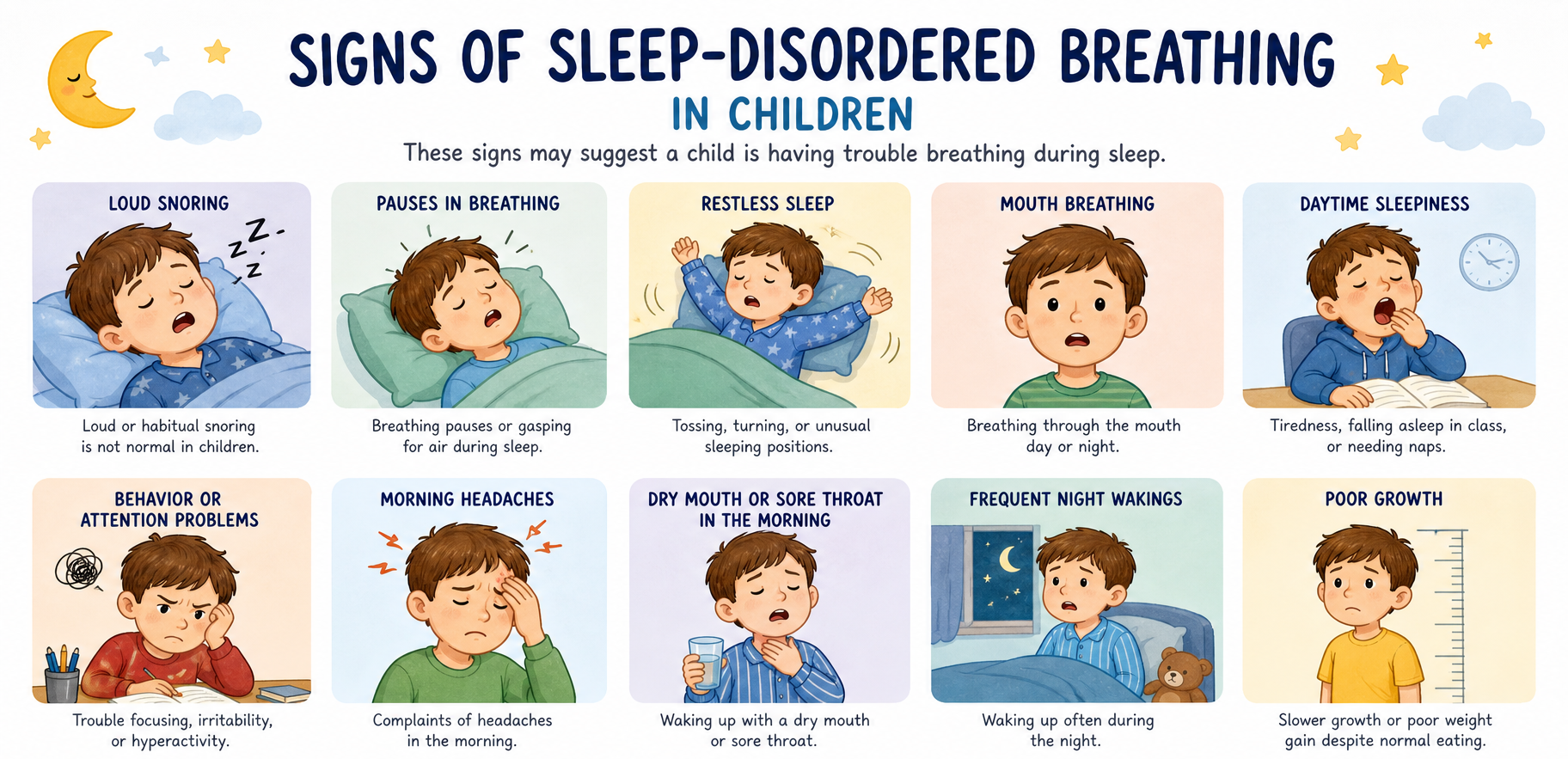
- Gasping or pauses in breathing
- Restless sleep or repeated awakenings
- Mouth breathing during the day or night
- Unusual daytime tiredness
Note how often these occur. A short recording of your child sleeping may help their healthcare provider understand your concerns.
Breathing pauses deserve prompt medical attention.
If you notice gasping or breathing pauses during sleep, seek prompt medical assessment rather than waiting for a routine dental appointment.
Should You Start With a Pediatrician or a Dentist?
Start with your child’s pediatrician for persistent snoring or suspected sleep-related breathing problems. They can determine whether an ENT, sleep specialist, or sleep study is appropriate.
A dentist can contribute by assessing dental development and identifying findings that warrant further evaluation. The American Academy of Pediatric Dentistry recommends medical referral for suspected pediatric sleep apnea. Dental screening does not replace medical diagnosis.
Start with the concern you have noticed. You do not need to arrive with a diagnosis or a treatment in mind.
Can Airway Orthodontics Help a Child Who Snores?
Orthodontic treatment may have a role for selected children after a complete assessment and in coordination with medical care. It is not a universal treatment for snoring or sleep apnea, and evidence for pediatric dental interventions remains limited. See AAPD’s treatment guidance.
Before deciding on care, ask:
- What specific dental finding would this treatment address?
- Does my child need medical assessment first?
- What alternatives should we consider?
- How will progress be checked?
Explore airway-focused dental care in Appleton to learn about the services available at Serenity Healthy Smiles.
Have questions about your child’s dental development?
Request a Dental ConsultationPreparing for Your Child’s Consultation
When contacting the office, explain your child’s age, what you have noticed, and whether they have already seen a pediatrician, ENT, or sleep specialist. Bring relevant records and a short list of questions.
You might write: “I notice snoring on these nights, and this is what their mornings are like.” Specific observations make the conversation more useful than trying to choose a treatment before the appointment.
If mouth breathing is also a concern, read our guide to mouth breathing in children.
Discuss the Dental Side of Your Concerns in Appleton
Serenity Healthy Smiles offers airway-focused dental services with Dr. Dawn Diehnelt at W3132 Van Roy Road, Appleton, WI 54915. Call (920) 364-0575 or request a consultation to discuss which dental appointment fits your concerns.