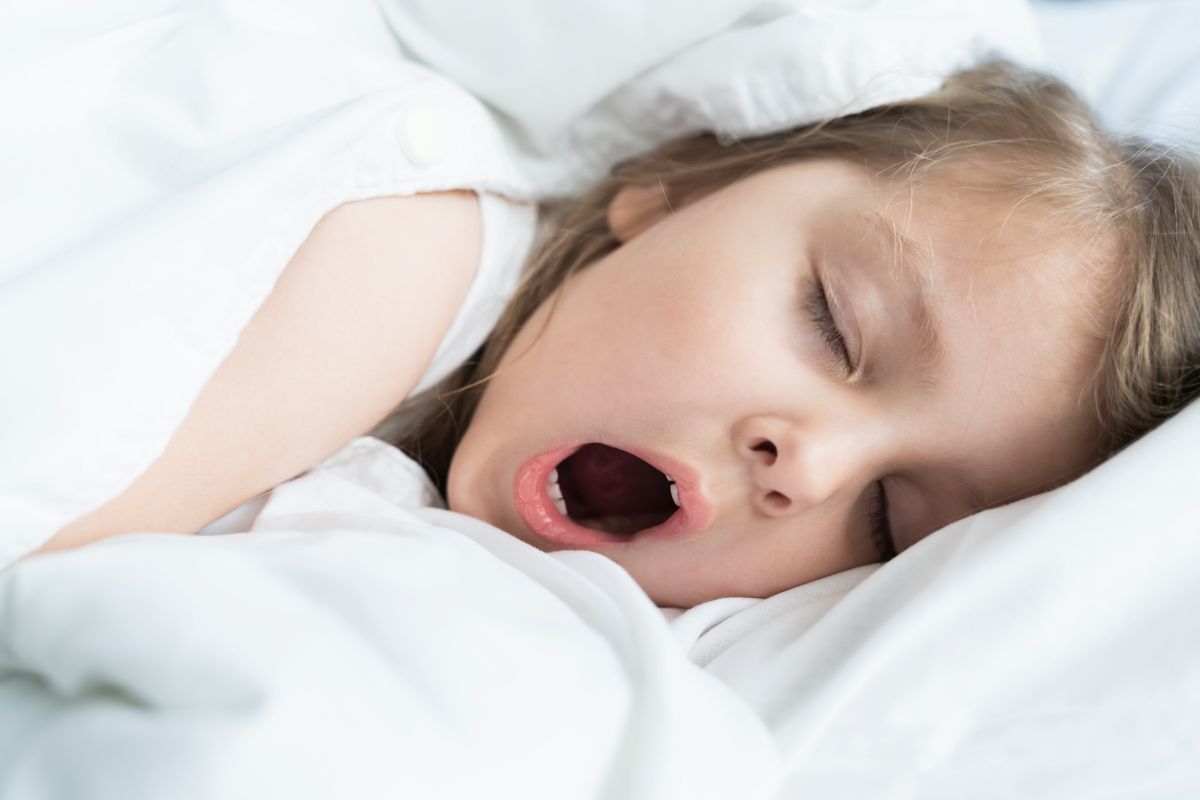

If you've noticed your child snores most nights, you've probably already heard some version of "lots of kids snore, it's nothing." And sometimes that's true. But when a child snores regularly, it isn't quite the same as snoring in adults — a child who snores is often working harder than they should have to just to breathe at night.
The sound itself isn't the problem. It's a signal that air is struggling to move past something — swollen tonsils, a narrow airway, a jaw that hasn't developed the way it should. Snoring is worth listening to, not dismissing.
Common Causes of Child Snoring
Several things can narrow a child's airway enough to trigger child snoring, including:
- Enlarged tonsils or adenoids
- Allergies or chronic nasal congestion
- Mouth breathing and low tongue posture
- A narrow palate or underdeveloped jaw
- Excess weight around the neck and airway
More than one of these is often at play at once, which is why child snoring is rarely something a single quick fix resolves on its own.
"Snoring isn't a personality trait. It's the airway telling you it's working too hard."
Dr. Dawn DiehneltWhy Child Snoring Deserves a Closer Look
Snoring happens when the soft tissues of the airway vibrate because air is being forced through a narrower-than-normal passage. In children, this kind of snoring is frequently tied to how the jaw and palate have developed — which is exactly what we evaluate in airway orthodontics.
Left alone, a narrow airway doesn't tend to resolve itself as a child grows. It's more likely to keep shaping how the face and jaw develop, and how well your child sleeps, for years to come.
Deep sleep is when the body does its growing.
Snoring is often a sign that a child isn't reaching the deep, restorative stages of sleep consistently. That matters for physical growth, immune function, and how well the brain consolidates learning and memory overnight.
Other Signs That Often Go Along With Child Snoring
Child snoring rarely shows up completely alone. Parents often also notice:
- Restless sleep, tossing and turning, or frequent waking
- Mouth breathing during the day, not just at night
- Bedwetting
- Crowded or crooked teeth as they come in
- Trouble concentrating, or behavior that gets mislabeled as inattentiveness
None of these confirm an airway problem on their own — but taken together with child snoring, they're worth mentioning at your child's next evaluation.
Noticing child snoring along with any of these signs?
Schedule a ConsultationWhy a Whole-Body Approach to Child Snoring Matters
We don't treat snoring as a standalone nuisance to manage. We look at how breathing, jaw development, and sleep are connected — the same holistic dentistry approach we bring to every patient.
How We Help Treat Child Snoring
Depending on what we find during an evaluation, care may include:
- A full airway and oral development evaluation
- Myobrace to support healthy jaw and palate growth
- Myofunctional therapy to improve tongue posture and breathing habits
- A referral to an ENT or sleep physician when tonsils, adenoids, or a formal sleep study are involved
When Should You Get Your Child Evaluated?
If your child snores most nights, breathes through their mouth, or seems tired despite a full night's sleep, it's worth having their airway evaluated. Child snoring that's dismissed as normal today can become a much bigger conversation later.
The sound is easy to hear. The cause is worth finding.